Travelling Beyond the “Exotic” and “Authentic” For Meaningful Journeys
All of our choices have consequences, repercussions that ripple further than we intend. How and where we spend our money matters, especially when travelling to remote regions like the Amazon.
As resilient and robust as the jungle may be, it is ultimately a fragile ecosystem already facing a multitude of external pressures that are endangering its stability: mining, deforestation, pollution, cattle ranching, encroachment. Basically, extractive industries are wrecking one of the most important natural biomes on Earth. And, unfortunately, tourism can fall into that category if it’s not regulated and managed responsibly by the local indigenous communities whose customs and territory sustain it, and who depend on the land and water for their own survival.
With governments doing the bare minimum (if anything at all) to support and protect the region, can we still enjoy cultural travel responsibly in 2026? I think we can, but it requires travel to become purposeful, intentional, and thoughtful. It means going back to the basics.
In a turn of events that he probably would’ve hated, Anthony Bourdain’s words continue to be overused by travel influencers desperate to appear deep and intellectual, ignoring the truth in Tony’s words when he said, “Travel is about the gorgeous feeling of teetering in the unknown”.
Because in the age of social media, it’s become about collecting places rather than inhabiting them, about showing off cool moments rather than living them, about curated packages for mass consumption.
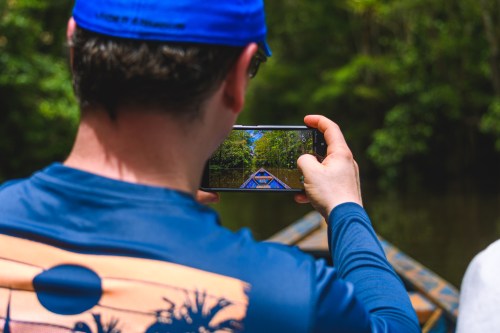
And this isn’t to say we should stop sharing our travel moments on socials, but that if we want to be more ethical travellers, we should strive to participate in tourist activities that respect wildlife and natural spaces, prioritise the needs of residents, and contribute to improving their quality of life, not degrading it for a few dollars.
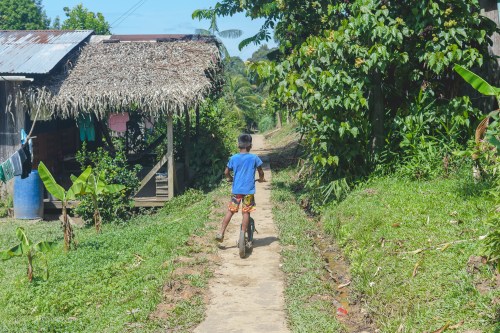
Unfortunately, that’s exactly what happens when mass tourism operators enter—and inevitably dominate—emerging markets, particularly in remote regions that already struggle from historic state abandon where locals can’t compete against multinational enterprises. In Colombia’s Amazonas department (the equivalent of a state or province), tourism could be an “engine for change,” according to Universidad Nacional Professor Santiago Duque, if managed directly by local communities. If mishandled, or directed by outsiders who don’t understand native customs, ecosystems, and ecological calendars, it can affect and degrade native cultures in order to fulfil visitors’ fantasies of interacting with aboriginal people.
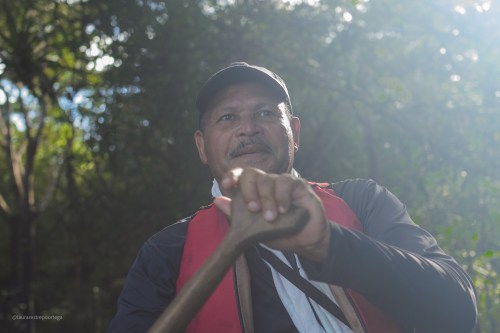
Juan Montero, an indigenous Cocama guide and all-around encyclopaedia of knowledge of the natural world, chuckles when he says tourists have “a very big imagination about us” and “think that, we, as indigenous people, still wear loincloths today.”
To cater to these cartoonish ideas, many resorts and agencies pay locals to dress up, paint their faces, and put on a show for their customers, centring tourists while commodifying, objectifying, and exoticising indigenous beliefs and symbols.
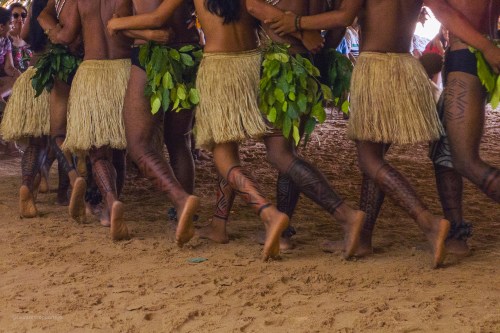
When a traditional dance—a sacred ritual—is performed for money outside of its ancestral context, it is effectively being stripped of meaning and packaged to be sold, degrading its history and purpose. But it’s marketed as a “spiritual” event so that tourists go home thinking they had an immersive or authentic experience, when, in reality, it’s nothing more than a commercial show that uses people as props and trivialises dresses, headgear, makeup, songs, and symbols that have millenary significance.
Célimo Negedeka, a traditional Muiname medicine man who has been working in tourism for over two decades, insists that “tourism isn’t bad if we don’t turn it into a tsunami” but worries that the communities who have opened their doors to mass operators and outside agencies are devaluing their own traditions by converting sacred spaces, like malocas—communal houses with high, thatched roofs used for meetings, rituals, and storytelling—into places for commerce. “You shouldn’t turn a house of teachings into a cave of business,” he says. That’s why it’s imperative that indigenous people are the ones in charge of deciding what elements of their folklore are shared and which are kept private, because some things must remain sacred.
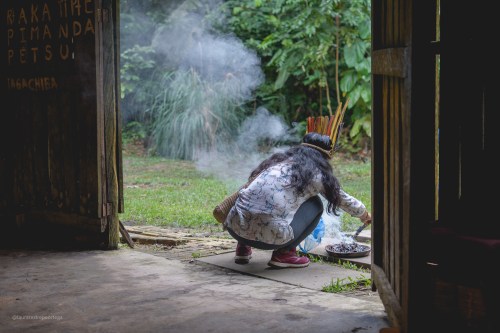
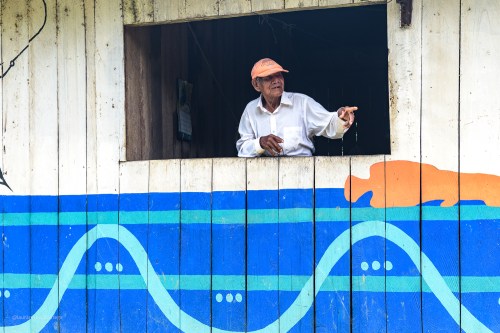
But it’s not just culture that suffers when mass tourism arrives in a remote location; natural environments also fall victim to unsustainable practices, as tours are created to ensure visitors’ comfort and entertainment, not to protect nature.
The Amazon’s ecological calendar, which dictates the seasons and the rains, is entirely interconnected with its wetlands, lakes, and rivers, all of which are essential to the health of the rainforest as a whole and every living being in it.
Duque urges tourists to understand that, in the jungle, “the fish move, animals reproduce, trees bloom and people live according to the rhythms of nature,” and no one understands these natural ebbs and flows better than the original inhabitants of the land, who have been observing them, living them, and learning from them for thousands of years.
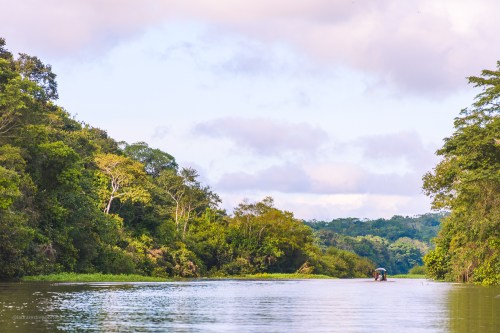
Negedeka has seen the “disorganised exploitation of the flora and fauna, and everything that sustains us” by greedy ventures in tourism and beyond, which is why he and his family provide a type of “differential tourism” focused on teaching and preserving inherited knowledge, and the protection and conservation of nature. “Rather than exterminate [nature], why not charge money to see it?”
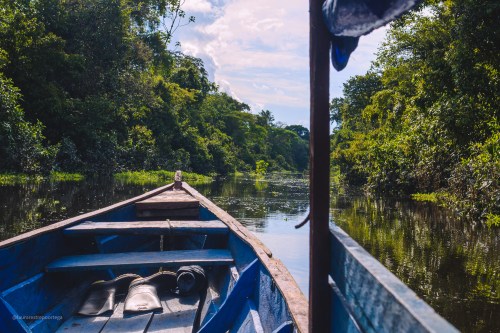
Montero agrees: tourism must focus on teaching and conservation. He understands better than most the importance of protecting the environment for his business to flourish, as he offers tours on the lakes and flooded forests during the high water season, but his desire to protect his surroundings goes much deeper than that—his love for nature is rooted in his upbringing as an indigenous man. “We all depend…on these rivers and lakes and the jungle, for everything. If we don’t have the jungle, don’t have the animals, don’t have water, don’t have fish, then what will we live on?”
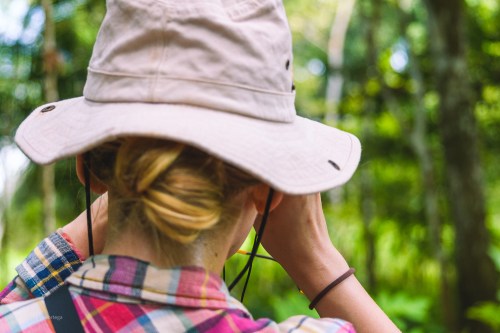
Of course, most tourists don’t travel somewhere like the Amazon with the intention of supporting environmentally or culturally unfriendly practices; they just want to feel safe and comfortable while enjoying new and exciting adventures in a far-flung place. And, of course, to take cute pics. And the truth is, the big operators are much better organised and have much more PR money than the regional providers, most of whom are not online at all, so when potential tourists start researching where to go and what to do in the Amazon, it’s more likely that they’ll choose the option that offers the whole package—accommodation, food, transport, and activities—and has reviews from satisfied customers. They don’t want to arrive in a new place to search for options on the ground.
But that’s kind of what’s killing real cultural travel, isn’t it? Comfort, ease, familiarity.
Because most people, as much as they love Bourdain’s quotes, aren’t actually willing to travel like he did. “I’m a big believer in winging it,” he once said. “I’m a big believer that you’re never going to find perfect city travel experience or the perfect meal without a constant willingness to experience a bad one.” Sometimes you just need to take a chance, to not have everything neurotically planned out beforehand, to leave space for spontaneity and surprise. That’s usually when the magic happens.
I can go on and on about the pitfalls and problems mass tourism brings—they create their own supply chains outside their place of operation thus bypassing the local economy, they underpay regional partners and enforce work schedules that are incongruent with their lives and practices, they deceptively sell artificial and commercial activities as authentic cultural events, they put unmanageable pressure on resources and spaces, often privatising them and displacing local people, and they exploit historical knowledge and aesthetics for profit—but at some point we do have to ask ourselves: where does the operator’s responsibility end and the individual traveller’s begin? It all comes down to choices. And marketing.
The way I see it, there are two words at the crux of the problem: “exotic” and “authentic”.
Let’s be clear—there’s nothing wrong with wanting to go somewhere that feels exotic, which literally just means originating in a distant, foreign country, or striking because it’s out of the ordinary. The problem is when we buy into the idea that different societies and practices can be simply defined as “exotic”, turning them into two-dimensional concepts without nuance or humanity. “Authentic” suffers from a similar issue: it’s used to flatten meaningful traditions into palatable and easy-to-digest symbols that are picturesque or Instagrammable, despite being, more often than not, completely superficial and contrived.
So, what’s the solution? To stop travelling? No! At least not yet.
Responsible tourism is a complex subject with multiple moral, ethical, and of course, financial considerations, but I believe the first step is to stop gazing inwards and expecting a place to change us, and instead questioning how we change a place when we visit. What is our presence costing remote locations?
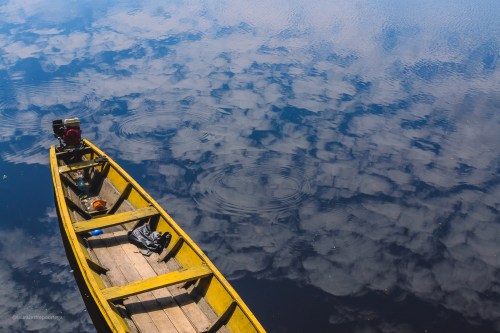
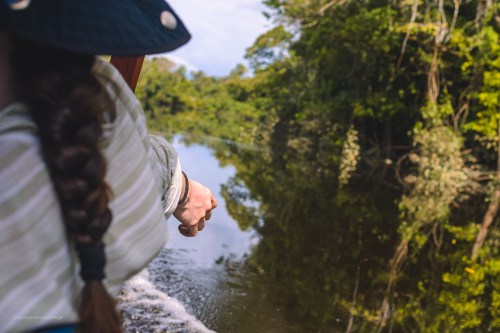
As capitalism limits our ability to choose from a veritable variety of offers thanks to monopolies, chains, and franchises that can effortlessly outbid local enterprises, the onus falls on the visitor to find providers who are part of circular economies that will directly (and favourably) impact their communities. Paying fair prices for goods and services, eating seasonally available ingredients, taking our plastic garbage back with us, and being mindful of our use of resources—particularly water, electricity, and fuel—are all ways we can individually have a more positive impact when we travel.
While mass tourism puts immense pressure on delicate ecosystems and overburdened public services, independent operators, who either work directly with or are from indigenous villages, tend to run smaller tour groups that have smaller footprints.
Responsible travel in 2026 is about personal exchanges that respect nature and benefit communities, about integration, conservation, and conversation, about stories and histories that challenge what we thought we knew. It’s about meaningful journeys for both locals and visitors. And it should come from a place of curiosity, respect, and love, not a desire for a popular social media post.
Because culture isn’t a souvenir you can pack and take home, it’s intangible and can only be truly experienced by spending time with those who keep it alive.
And if you’re dreaming of cuddling wildlife, make sure you’re not supporting operators who use captive animals for their tours. The best thing to do is to visit certified sanctuaries that rescue trafficked animals and rehabilitate them to be released back into the wild when possible.
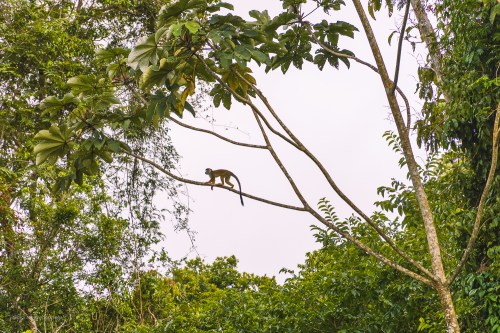
To enjoy spotting wild animals in their natural habitat and to ensure it’s a sustainable practice in the long run, travellers can seek out communal associations that work to protect and restore essential networks such as rivers, wetlands, and forests. For indigenous peoples, whose ancestral practices are deeply interconnected to the natural world, it is vital to protect these ecosystems not only for their own survival but, like Montero says, for future generations. “And tomorrow, what will your children and grandchildren find here? What did mom and dad leave for me? It’s that simple.”
 Laura Restrepo Ortega
so very true! You are such a talented and thought provoking writer.
LikeLiked by 1 person
Gracias, amiga! I love you and appreciate your constant support so much!!!
LikeLike